Available on both iTunes and Amazon, get your copy today!

Available on both iTunes and Amazon, get your copy today!
I am pleased to announce that production of Book 3’s audiobook is going smoothly. Though I don’t have as much time as I used to, I am making steady progress. It should definitely be out by the end of the year, and my hopeful target window is August. Another project I’m slowly working on is a “box collection” of The Warriors of Bhrea where all the books are in one ebook, along with bonus short stories (some of which you’ve seen if you’re subscribed to my newsletter!)
I’ve also got many more book ideas, and the current focus is a standalone fantasy called The World Jumper. It’s about people who can teleport around the world and even to other worlds, but the core of the story is actually about confronting and healing wounds.
Unfortunately, progress on any other project has stalled as I try to balance working on the audiobooks with parenting a toddler. And, as the title of this post suggests, there have been other factors hindering me.
I wanted to share a bit about my experience the past couple years, how mental health has affected my ability to write the stories I want to write, as well as my ability to manage all that life throws at me.
I have always had OCD tendencies. I remember as a kid hearing the common phrase “don’t step on the crack, or you’ll break your mother’s back!” For me, I took it seriously. I often avoided stepping on any cracks, because there was some fear in my brain that if I did, I actually would cause severe back injury in my mom. My brain still prefers to step over sidewalk cracks. It never turned into a severe compulsion for me, but there was always that small fear and avoidance.
When I was in my early 20s, I had an extended period where I suffered intensely uncomfortable images and sensations triggered by scenes of violence in movies—especially related to the neck. I’ve never had neck trauma of that kind, but for whatever reason, my brain latched onto an intense fear of violent neck injuries. It took a long time for those gruesome intrusive thoughts to fade away. There are several other instances of my brain obsessing about something very unwanted throughout my young adult years. However, I had never considered them as a mental illness.
After my son was born, I had natural motherly anxieties. Is my child breathing? What if I drop him? Is he eating enough? My family can attest to the fears and anxieties that I harped on them about. Thankfully, that also did not develop into severe obsessions—but the stresses of motherhood did trigger other obsessions. Just before and during my pregnancy, I reverted to my Catholic faith. My faith dearly matters to me, and as I experienced the natural stresses of motherhood, my brain started to latch onto an intense fear of displeasing God and that I was not in right relationship with Him. My mind couldn’t stop running over all my past sins (and there were many) and whether I had properly repented of them and confessed them. I’d confess the same sins over and over, or mine through my memory trying to find every little thing I’ve ever done in order to gain a feeling of being spiritually clean. But, it could never be achieved, not for long. I’d miss out on receiving communion or punish myself in other ways out of fear that I had grievously sinned and couldn’t be forgiven. Eventually, I learned about scrupulosity and how it affects many faithful people and even nonreligious people. I learned some ways to manage it, but there would come waves of intense anxiety, doubts, and fears about sinning that would feel almost unbearable.
Some of these fears came up while I was writing and editing the final book in The Warriors of Bhrea. Doubts pestered me constantly—was I writing this scene the right way? Or a sinful way? Did I commit a heresy by not portraying God completely correctly? If I wrote certain characters making certain choices, was I sinning? Was I scandalizing readers by portraying certain things in certain ways? It didn’t stop at the final book. I scoured over the previous books, making sure there was nothing directly sinful in them. For example, I removed any instance of taking the Lord’s name in vain. I mined through my social media as well, deleting any posts that ignited these fears of sinning. I told the new priest at my parish with intense embarrassment that I had old copies of my books with the Lord’s name in vain—only to be greatly surprised that he didn’t care and wouldn’t judge me. In fact, in some ways it made me feel worse. Why was I so obsessed with this? No one had pointed out to me great moral errors in my books—even those who were faithful Catholics. No one else seemed nearly as worried as I was about all this. So what was wrong with me?
Whenever one fear seemed conquered, more would pop up in its place. They would always attack the things most dear to me—my integrity, my marriage, my parenting, my relationship with God. Some days all I could do was browse my phone or watch TV because it was too difficult to be present with my family. I’d be playing with my son or reading books to him, or I’d be having a conversation with my husband, but my mind would be far away. It terrified me how well I could mimic normal interactions while my mind would be hurdling down a spiral of shame and fear. I’d run to the sacrament of confession time and time again, fearing I had to confess the horrible thoughts running through my brain.
Finally, after much prayer and attempting to surrender my struggles to God, some clarity started to shine through the dark clouds of confusion and dread. Something was wrong, deeply wrong, and it wasn’t the state of my soul. In my obsessive research of my problems and worries, a certain acronym kept popping up: OCD. One of my favorite scrupulosity resources spoke as if scrupulosity and OCD were the same thing. I’d never thought of it before that way. I’d always envisioned OCD as someone washing their hands excessively or checking the door was locked am excessive amount of times (I’d only check two or three times, which is of course perfectly reasonable). My impression was that the compulsions would all be external—and I didn’t do all these strange behaviors.
…Right?
As if going to confession almost every week and listing off every little fault and feared sin wasn’t unusual and destructive behavior. As if waiting for thirty minutes in the narthex with my rambunctious son until my church’s priest wasn’t busy to anxiously ask him a question I already knew the answer to wasn’t unhealthy. As if sitting in the church pews with my eyes fixed firmly on the floor or squeezed shut to avoid seeing people and statues that triggered awful thoughts wasn’t abnormal. As if ruminating for hours each day about my past choices and whether my intrusive thoughts were sinful wasn’t spiritually harmful.
It took months, many tears, and gentle encouragement from the Lord to come to terms that I had a disorder in my brain. It wasn’t that I was displeasing God or permanently disqualified from His love, it was OCD.
Even with that knowledge, it took even more time to start learning how to help myself. The answer wasn’t to avoid all these things that triggered doubts, unwanted thoughts, and anxiety—the answer was to embrace them and do the things I wanted to do even if I was dealing with strong negative thoughts and feelings. Easier said than done! It is a work in progress, and I’m happy to say that I’ve felt very optimistic as I’ve started treatment with a therapist experienced in treating OCD. I’ve already experienced some improvement simply by knowing I have a disorder and the obsessions aren’t me. They are like a mischievous little monkey in my brain flinging poo, trying to get a reaction out of me and do a compulsion.
Some days are worse than others. Some days, I feel normal and well-regulated, able to throw off with ease the odd thoughts, feelings, or impulses when they intrude in my mind. I confidently lift my head and look up at the world around me, appreciating the beauty of people and God’s creation. Other days, despite knowing errant thoughts and worries are just OCD, it’s so hard to shake them off. It’s hard to shift my focus to wholesome, productive tasks (like writing). The thoughts stick around, berating me and beating me down until I feel overwhelmed. It’s those times that I’m so thankful for my family and friends who support me and never degrade me for having a difficult moment. They truly are a gift from God.
Right now, writing still feels like a daunting and exhausting task. I hope that with time and by practicing the new skills I learn in therapy, that I can get my mojo back. I have so many projects I’m excited to work on, and I refuse to let mental illness steal my peace and creativity.
If my experience in any way sounds similar to yours, please know that you aren’t alone. Whatever worries and obsessions occupy your brain, they aren’t you, they are a mental illness. It can be very scary to talk about such a thing and admit there could be a malfunction in your brain, but please, please, PLEASE seek help. You don’t have to live in the terrifying world OCD fabricates—it can get better with help. Below are some websites with resources for seeking treatment. Don’t hesitate, and don’t let the OCD gremlin tell you that your situation doesn’t count or that you are somehow unique and can’t be helped. You can be helped, and you owe it to yourself and the people around you to get better.
International OCD Foundation (has lots of resources to select from there)
What Are Intrusive Thoughts?
NOCD (Online Treatment Resource)
OCD and Anxiety (YouTube Channel)
Scrupulous Anonymous (for religious sufferers of OCD)
Brain Lock: Free Yourself from Obsessive-Compulsive Behavior (book, ebook, and audiobook versions available)
Welcome to Part 2 of my Culture Building 101 series. For the other posts, click here. For the Conlanging 101 series, click here. To see these concepts in action in my books, click here.
Picture your most ideal, favorite place to be. Is it strolling on a sunny beach? Is it walking down the street of your favorite neighborhood, full of colors and music? Is it sitting next to a mountain stream, with absolutely nothing but nature around you? Consider why this special scene is your ideal—what cultural influences from your background are you drawing upon? Were you born in a city and long for peace and quiet? Did you grow up feeling stuck in a rural area and wanted something more vibrant and exciting? Yes, there is a reason I’m asking these questions. Let’s dive in!
The environment not only shapes your individual preferences (quiet mountain streamside enjoyers unite!), but entire cultures. We are beings with physicality reacting to a physical world. We know that the world, and the universe, is full of a vast range of environments—some habitable, and some not. Let’s start with this baseline.
As you’re building your culture(s), you may be inspired to think about people or other intelligent species living in a place that seems inhospitable to normal humans. Even on earth, humans have found a way to adapt to even the most unlikely environments. The Arctic, the deserts, high altitude mountain ranges—many people would say no way to living in those places long term, or even short term. And yet, those locations teem with life—human and not—and they have found ways to survive despite the harsh conditions. Let’s consider some ways people have adapted physically and culturally to the most unlikely places.

The vast majority of people live below about 8200 ft above sea level, but not all. Several populations across the world have adapted to high elevation living, such as in the Andes, Ethiopia, and Tibet. If living in high elevation long term, most people must deal with the negative effects of lower oxygen, like dizziness, headaches, and fatigue—and those are just the light symptoms. As the hypoxia (lack of oxygen) worsens, you could vomit, your hands and feet can swell, and at worst, your lungs can accumulate fluid and your brain can swell. People die from hypoxia and related complications. It’s why not just anybody can climb Mount Everest. It requires extensive training and supplies. However, the populations who have lived in high altitude climates for generations, even thousands of years, don’t experience all these side effects. That’s because over time, these populations have adapted to the environmental stressors on a physiological and even genetic basis. Tibetans living on the Tibetan Plateau at altitudes of 11,000 ft and higher are born with larger lungs, more oxygenation in their blood, and breathe more rapidly—even if they leave the plateau to live at lower altitudes.
This is only one example of the amazing abilities of the human body to adapt to harsh climates. Complementing these adaptations would be cultural adaptations, seen in clothing, food, architecture, values, religion, you name it. One interesting way Tibetans have culturally adapted to high altitudes in some places has been to practice polyandry—that is, one woman marrying multiple men. This is extremely uncommon worldwide, but in Tibet, some families practice this in order to keep the scarce arable land within a certain family (as land is passed through sons).
There are a myriad examples of how humans (or any lifeform) have adapted to different environments around the globe. If you know roughly what kind of environment to focus on for a certain culture, you could look at real cultures around the world for inspiration. Below are some examples that could get your creativity going. Each group is linked to an overview of their culture on Wikipedia, but you can go to the references section to find more places to learn about each culture.


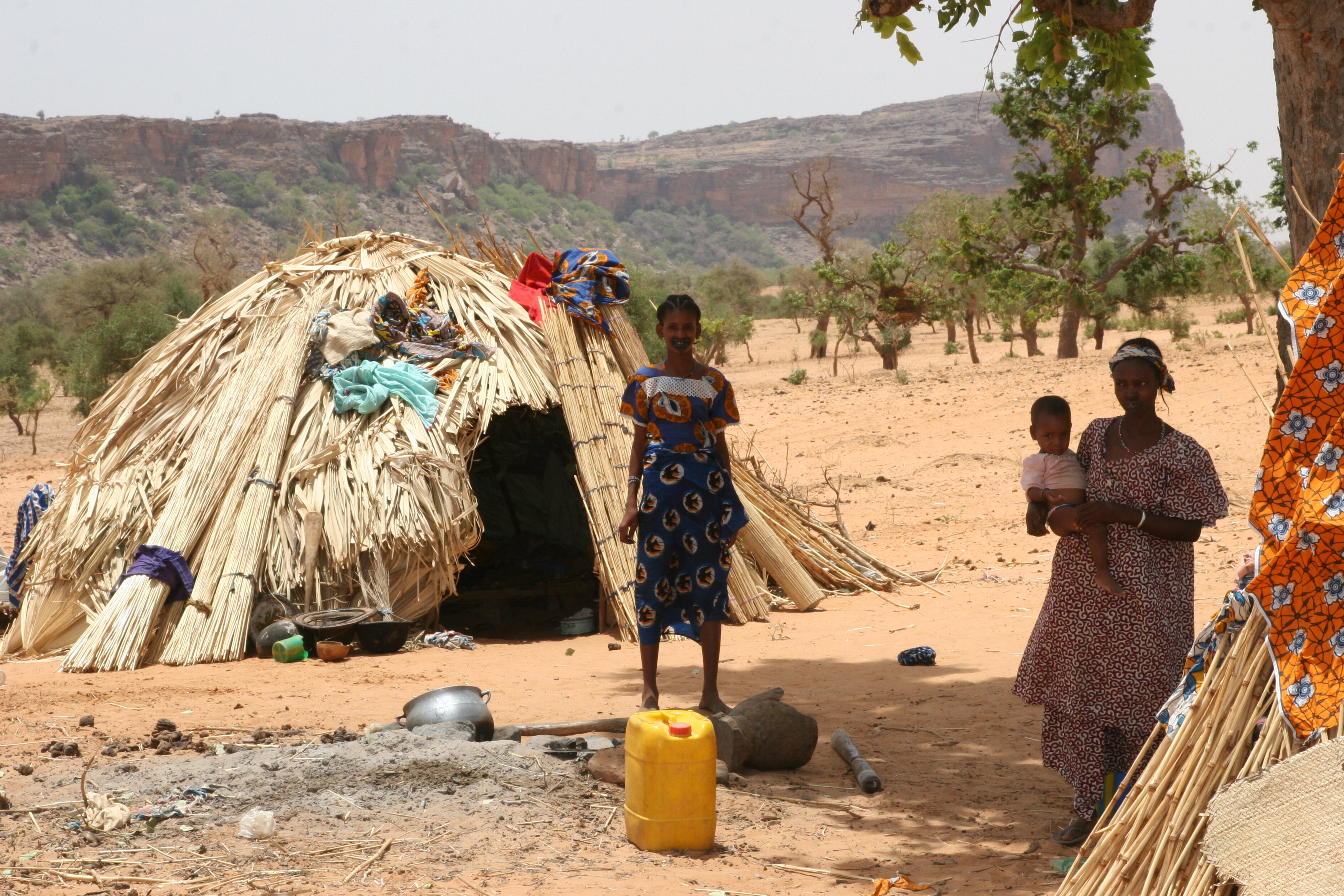


Hopefully, by learning a bit about how humans adapt to various earthly environments, it would help inspire some ideas of how nonhumans would adapt, or how a culture would adapt to nonearth environs. Let’s start with nonhumans.
You could get inspiration from any living thing that already exists on Earth and try to translate their physiology and environment would influence a culture. For example, if you are creating a canine race, perhaps you could consider how their incredible sense of smell would affect culture. Like real dogs, would they have intricate sniffing rituals to assess people they meet? Would some people of this race try to masks scents to remain undetected? Would materials like incense or other smelly items be heavily used in religion, or rejected because they overwhelm the canines’ noses and distract them from contemplating God?

Assuming the nonhuman life is anything like life on Earth (and it doesn’t have to be), it will require some kind of energy source and a way to metabolize—or use—the energy. If you want to try to create an entirely new lifeform or on a new planet, you’ll have to consider this most essential component of life. How do they consume energy, and how do they acquire said energy to consume? While much of Earth has habitable areas for most living creatures, not everywhere is. But, that doesn’t mean there is no life there. While even humans could not live in the middle of a volcano without advanced technology keeping them alive, there are lifeforms that thrive at volcanic vents and live off of the heat energy. Or some live in acid pools. Or places with high radiation. These lifeforms are called extremophiles. Check out more about them here and learn some incredible ways life makes do with extreme environments—and learning about these lifeforms could inspire more complex and intelligence lifeforms living in just as extreme places.
You may immediately begin to get an idea of how the biology and environment of your people and world affect the culture, but if you can’t think of something immediately, don’t worry. There are still several steps of the “pyramid” to go. You are laying your foundation of metaphysics, physics, environment, and biology. Stew on these for a while and let some ideas flow, even if they don’t work out later.
If you’d like to see how I’ve built societies and let the environment shape their cultures, check out my epic fantasy series, The Warriors of Bhrea!
AT LAST, the epic final installment of The Warriors of Bhrea is here! Stakes are at their highest, the heroes are ragged and nearly losing hope, and the villains are on the brink of complete victory. How will Lauren and her friends prevail?
The ebook, paperback, and hardcover are all available. Order your copy today, and I hope you enjoy The Empire of Damnation! Check out the whole series HERE.
The kingdom of Bhrea is on the brink of destruction.
All that is left to defend Bhrea and the rest of the world is the small, haggard group that survived the failed attempt to retake the capital city Terrn from the clutches of an evil goddess. They are weak and on the run; meanwhile, the enemy runs rampant in a terrorized city, soon to set their sights on the rest of the world. What Lauren and the other survivors don’t know is the enemy’s final plan, nor the catalyst that will set the endgame in motion.
The heroes have one final chance to win the battle—but are they prepared for what is in store? While they gather allies and resources, Astrin and her cohort of imposters stay one step ahead. Each choice, each move brings Lauren and her companions one step closer to the ultimate checkmate. And if they lose this time…there is no coming back.
Welcome to Part 2 of my Culture Building 101 series. For the other posts, click here. For the Conlanging 101 series, click here. To see these concepts in action in my books, click here.
Whether we recognize it or not, metaphysics plays an important part in our everyday lives. Without it, we would be unable to know anything about anything at all. It pertains to the nature of reality, the nature of consciousness, and what is existence.
Why have I suddenly waxed philosophical? What does this have to do with building a culture? Consider these questions:
You have a belief that answers each one of those questions, and there are a variety of ideas that seek to get to the bottom of all these matters. All these questions address fundamental qualities of reality such as identity, cause and effect, purpose, and, well…what is reality?
Cultures and individuals will operate according to how they understand and seek to answer these questions. A real world analogy you can consider is the nature of time in different cultures. Many cultures consider time to be circular or even an illusion, whereas other cultures consider time to be a linear, progressive aspect of nature. This can influence how people of different cultures value things like punctuality or recording events. Another way metaphysics will fundamentally affect entire cultures and individuals within them is whether they believe there is such a thing as objective truth or reality at all. This can especially impact morality, leading to either a relativist moral system or a concrete one with distinguishable acts of good and evil.
Most people will choose to create a world where the metaphysics and physics, the essence of reality and how it manifests, is generally the same as ours and recognizable. Cause and effect, the direction of time, all go in the same direction as our reality. Gravity and light behave the same. It would take a LOT of work and imagination to come up with an entirely new pattern of existence, so understandably, most apples don’t venture too far from the proverbial tree.
Where it can get very interesting is how a magic system might affect the laws of physics (or the metaphysics of reality itself). Are gods bestowing power upon wielders of magic, like a cleric or warlock in Dungeons and Dragons? Is there a non-sentient font of power that those with particular traits/heritage can draw upon? Are there multiple dimensions beyond what people can directly see, with other planes of existence where more powerful beings exist? Is there a multiverse that allows people to “pull” energy from in order to use in their universe, or that people can travel to? Perhaps those questions can get the noggin joggin’.
Depending on where you are in your worldbuilding journey, you will approach it in one of two ways. The first way is you will start with a broad (often metaphysical) concept and start creating a world from the ground up using that concept as a foundation. You might start with a question such as “what if the Greek gods were real?” or “what if our universe is a simulation?” and try to map out how those questions that concern the metaphysical reality of your world affect the rest of the “pyramid.” The second way is you have a specific phenomenon or scenario in mind, and you work backwards all the way to the metaphysical questions in order to explain the phenomenon/situation. This second way is largely how I planned the culture in my series, The Warriors of Bhrea. I had an idea about warriors who could manipulate elements such as light, water, and earth, and over time, I figured out the metaphysical mechanisms that would explain and power these abilities. The way you choose to go about your own worldbuilding is entirely up to you—there is no right or wrong way!
Okay, maybe a wrong way is just copying the entire worldbuilding schema of Star Wars and calling it Schmar Doors.
An overview of metaphysics (Wikipedia)
Some more worldbuilding questions on metaphysics and physics
It’s been 84 years…
At least, it feels that way! Finally, the second audiobook of The Warriors of Bhrea is complete. You can find it on Audible or iTunes–links below!

It’s the final one, the big kahuna. I think you will enjoy this exciting, action-packed conclusion to The Warriors of Bhrea.
As usual, Kiarou has done an AMAZING job illustrating the cover for this final book!
I’m excited to also announce that The Empire of Damnation ebook is available for pre-order! It is even at a special pre-order price of $1.99. It will go up to $2.99 on the day of release, so be sure to get it at the discounted price! When it’s released, it will be on Kindle Unlimited like the others.
The paperback and hardcover are not available for pre-order yet, because Amazon only lets you schedule them a couple months in advance. I will make a post when those pre-orders are up! They will be at a discount price as well.

All that is left to defend Bhrea and the rest of the world is the small, haggard group that survived the failed attempt to retake the capital city Terrn from the clutches of an evil goddess. They are weak and on the run; meanwhile, the enemy runs rampant in a terrorized city, soon to set their sights on the rest of the world. What Lauren and the other survivors don’t know is the enemy’s final plan, nor the catalyst that will set the endgame in motion.
The heroes have one final chance to win the battle—but are they prepared for what is in store? While they gather allies and resources, Astrin and her cohort of imposters stay one step ahead. Each choice, each move brings Lauren and her companions one step closer to the ultimate checkmate. And if they lose this time…there is no coming back.
A little over a week ago, I finally finished the first draft of the fifth and final book of The Warriors of Bhrea. The good news is that the final book, The Empire of Damnation, will be out in the next few months! The bad news is…I’m sad. 🙁
Do you know how long I’ve been working on this series? Do you?? I started really writing it in 2018, but the ideas–the world, many of the characters–had been in my head for much longer, since childhood. To see the series complete (though some edits are still needed) is just. Crazy. But, crazy in a good way.
Seeing my story grow and develop over these past several years is a privilege I hope all writers can enjoy. There is nothing like being able to write the pay offs you’ve been building up for years. It is an incredible feeling to see your characters ending up where you think is most fitting. It is like attending a loved one’s graduation–you’ve been watching someone grow up from something small to something big, even helping them on their journey. And now, you get to watch them go out on their own into the great wide world. It inspires a huge sense of accomplishment and gratitude, to be able to witness it and be the architect of the whole affair.
Lastly, it’s a huge relief. It is a relief to finally have a complete idea down, a story from start to finish. It’s a relief to be able to sit back and take a break, to know that a big job is done. Especially since my son was born almost a year and a half ago, I’ve felt a lot of pressure from myself to just get! It! Done! So the final part of the series would not just fall to the wayside in the flurry of learning to be a mom. While I have many more writing projects planned, getting this one under my belt is a huge milestone, and I want to take some time to kick back and relax for a bit.
So, for those reasons, it is a cause for celebration! I’ve finished a series–and a five-part series at that! It’s not easy to write a pentology, but somehow I did it.
But with that celebration, sense of accomplishment, relief, and happiness, there is also some grief.
The flipside of watching your loved one at their graduation, while a joyous event, can also be a sad one. It’s a time of letting go, which can be hard to do. You see, when you cultivate a set of characters in your head, you eventually develop an attachment to them, and when their journey is complete, that means it’s time to say goodbye. The characters have “grown up,” and it’s their time to go out into the world and entertain people with no further input from their creator.
The silver lining of this is that it’s not truly the end for these characters, for I have side stories, prequels, and even a sequel series in mind. But, the imaginative journey I began as a kid has completed it’s first (and largest) leg. It’s like hiking a long trail to the top of the mountain, turning around, and realizing you’ve made it halfway up . There’s relief, but there’s also a bit of sadness that the journey is already partly over. After a while, it will be all over.
I won’t subject you to what is essentially a diary entry for this whole post. I have some takeaways, some things I’ve learned on this incredible ride!
First, take your time. I can’t repeat it enough. Don’t rush through something just to get it done. You will enjoy yourself, and your project, a lot more if you allow yourself to enjoy the process rather than obsess over the product.
Second, don’t procrastinate and overanalyze. Does this contradict what I just said above? No. Too many times I’ve seen writers get hung up on revising to the point of perfection, at the cost of never putting their work out there. I’m happy to break it to you–your story will never be perfect. It is impossible to reach perfection, so let that be permission to let others enjoy your story even if it doesn’t reach your perfectionistic standards.
Lastly, when you do finish your project (and you will, because you’re awesome), allow yourself to feel all the feelings–the good and the bad. It’s your story, you’re the boss, it’s your party, and you can cry if you want to!
To view the full list of my Culture Building 101 series, click here.
To view my Conlanging 101 series, click here.
You may have read my series on conlanging (the full series here). If you haven’t and want some pointers on creating your own language, be sure to check it out! Now, what if you’re interested not only in creating a language, but creating a beautiful home for that language to live in?
That’s where culture comes in. Perhaps you’re interested in worldbuilding for a story you’re writing, a tabletop campaign you’re planning, or simply want to have an outlet for your creativity. Whatever the case, an essential part of worldbuilding is designing and fleshing out cultures within your world. There are a million and one blogs, websites, and tools helping you figure out the logistics of a realistic (or perhaps unrealistic, but original, universe and magic system). This series is going to focus most on the cultural aspect of worldbuilding—helping give some good starting points, considerations, and resources for constructing a culture (or many cultures) for your world!

Thousands of years ago, I studied Anthropology (and also Global Studies) in college. It wasn’t the most useful for getting a job, BUT, it has been very useful for guiding my own culture and language constructing. And now, I will share what I learned through my own experience in this process and implementing it in my book series, The Warriors of Bhrea.
Like in Conlanging 101, it is important to determine why you want to design a culture. What purpose will it serve? Will you need to start building from scratch, or will you already have a real world example to draw from? How involved will the cultural aspects of the setting be with the story/gameplay/etc? These questions will help determine the scope of how much detail you will need and how in depth you will need to focus on certain aspects of culture. For example, if you are writing an alternate historical fantasy set in medieval China, you won’t necessarily need to build a culture from scratch, but you will need to adapt the culture of that time and place to whatever fantastical elements you will introduce in the story (like if dragons were real). As another example, you might be creating a tabletop RPG set in an entirely different universe where the very physical laws of nature are different, so you’ll need to go DEEP into the foundations of worldbuilding and how that will affect the cultures of that universe. And finally, sometimes you won’t need to plan out an ENTIRE culture, only focus in depth on certain aspects that are important for your project. Perhaps much of your fantasy world reflects our own, but you want to pour your creativity into the religions of your world. You will still want to consider how other aspects of culture influence religion, but you won’t need to plan out detailed systems unless they deal directly with religion.

Once you have determined your “why” and the scope of your project, on to actual building! Sort of like conlanging, culture is made up of foundational pieces that build upon each other. However, instead of just putting basic sounds together into more and more complex sentences, I view culture more like a pyramid. At the base is the fundamental aspect of reality, the physics and metaphysics of the universe, and at the top is more “surface level” stuff like the aesthetics of buildings and clothing—the things that would be more directly apparent in a setting.
And what all is in between? While it may not cover all aspects of culture, my process generally goes like this:
Metaphysics/Physics
Environment/Biology
Geography & How Geographies Interact
Physical Needs
Beliefs & Values
Family Structure
Societal Systems
Technology
Aesthetics
Individual Differences
The first three blocks pertain more to the physical aspect of a world. While not dealing with culture directly yet, they still represent very important considerations for the culture. After all, it is difficult to have a culture if there is nowhere for a culture to live!
The next seven blocks have more to do with the actual culture you want to design. Several of those categories, like societal systems and family structure, are more complex and might require some “sub posts” in order to fully explain my process.
For now, however, I will wrap up this introduction. I hope you find the upcoming information useful, and if you’d like to see my culture-building in action, be sure to check out my book series, The Warriors of Bhrea!
You’ve probably heard of Klingon, or perhaps Quenya (from J.R.R. Tolkien’s books), but have you heard of Anglish?
It might sound a little familiar, but only because of its play on the word “English”—you know, one of the most commonly spoken languages in the world?

Before I get into Anglish, first let’s talk about English. Pretty much any English speaker, native or learned, knows that English is…weird. So many strange exceptions to rules, odd spelling, and pronunciations that don’t match how a word looks. WHY is that?
There are several reasons, from vowel shifts to dropping consonants in a word (but keeping the letters, of course). The one I will focus on right now is foreign influence.
The history of the British Isles can be oversimplified as one long string of invaders taking over. Celts, Romans, Anglo-Saxons, Vikings, Normans, the French… Who hasn’t taken over Britain at some point? We’ll start with the Anglo-Saxons. A Germanic tribe, their language was the root of what we speak today. When they took over, they mingled with the Celtic tribes, and presumably, some exchange of vocabulary occurred, but we don’t know the exact extent.
A few centuries later, Vikings start invading and bringing their own language (Old Norse), and that contact further influenced English. Another couple centuries later, and the Normans invade, successfully conquering England and establishing a new ruling class. This is where French starts to heavily influence the development of English.
I have written before about how class differences affected which French words got adapted into English. Words that deal with the raw, unprocessed product, such as a pig or cow, remained English. Words that dealt with the end product (and thus made it to the tables of the ruling class), became more influenced by French. For example, pork and beef.
What’s the point of all this? Why I am rambling about the French and cows?

Anglish is variation—a sort of conlang in the context of a real language—that attempts to only use words firmly rooted in English’s origins, not words borrowed from other languages. Psh, you say. That’s easy!
Is it?
Take the following sentence:
I am a person because I use my brain—that is a fact!
Silly sentences aside, can you spot how many of those words are from foreign (mostly French) influence?
If you guessed person, because, use, and fact, you are correct! I was surprised to learn brain is derived from Old English brægen. Not a foreign word!
Anyway, it’s not so easy to omit foreign words, is it? Here is the same sentence but using only words derived from Old English:
I am a man owing to wielding my brain—that is a truth!
You can see how it’s still intelligible, though quite different than what might come naturally.
Many people have attempted to whittle away foreign influence on the English language, notably Paul Jennings, who coined the term “Anglish” in 1966 (900 years after the Battle of Hastings, where the Normans defeated the English and began their reign of Frenchy terror).
And now, the Anglish project garners fascination from all kinds of folks. Some want to exercise their linguistic chops and come up with new words as an alternate for modern terms that Old English never envisioned. For example, instead of “computer,” saying “reckoner,” which sounds a little ominous…but also rather cool.
If you’re the conlanging type like I am, you are probably interested in languages in general, as well as their history and relationships. That is one reason to consider looking a bit into Anglish, simply to compare how English could have been to what English is today. Then, you could apply some of those concepts to your own language. How has outside influence changed the languages of your world? What is the reaction to that influence? Are there factions in your world that oppose that influence and wish to “restore” the language?
It’s questions like these that might make exploring Anglish worth it. Well, where can you do such a thing? Turns out, there is a community for that, including groups on Discord, Reddit, and others. There’s even an Anglish translator.
If you’re interested in Anglish and how it could be a fun and informative way to explore your own conlang, be sure to check it out at www.anglish.org. You can find links to the various communities concerned with Anglish there, as well as some videos and history that expand upon what I wrote here. It’s got some great info!
Want some more resources? Here are a couple more sites that provide useful info on the origin of English words and some ways to “translate” modern English to Anglish.